Sunday, March 18, 2012

City without a Soul

And speaking of Luxembourg (mentioned in my last post as a country that didn't really capture my heart). . . I just found this draft for a post from 2009. It's got kind of an abrupt ending, but it's been so long now that I don't feel like I can finish the post with a whole lot of accuracy.

Actually, I'm really thankful that my cousin and frequent travel partner Kirsten is so good about journaling. I do have her record of the trip, but my intention on this blog is to get my own impressions down in writing. So, here's the unfinished post; it was fun for me to re-read it, and it's a good incentive for me to blog now about my more recent travels - before my impressions are so faded.


Luxembourg is absolutely gorgeous, like a city right out of a fairy tale. But it's also, well, kind of boring. Ok, so we took a good tour of the palace where the Grand Duke lives and saw two very interesting museum exhibits, we enjoyed exploring the casemates that underlie the old part of the city, and we had some good food and some great Reisling - but two days there was plenty of time. Longer than that and I think the sumptious bank buildings and the shiny BMWs and all the Loius Vuitton bags (even more than I see in Seoul, I think - and that's saying something!) would start to grate. In the short time we were there I found myslef thinking several times - and saying it out loud at least once - that I kind of felt like we were in a fake city in Disneyland, wondering when it would close down for the night.

A bit more on the bright points mentioned above: our palace tour was guided by a friendly middle-aged Luxembourg transplant from Holland and included lots of interesting info on the royal family, including their one-time connection to the Dutch royal family.

The Luxembourg City Museum had a temporary exhibit on murder. I don't think there was any particular connection to Luxembourg, but anyway it was thought-provoking. The exhibit included sections on famous murderers, like Charles Manson and Jack the Ripper, and on punishments for murder, and an interactive item where museum visitors were supposed to place a card in a clear glass box with a scenario in which they would murder someone. Some of the options: Would you murder for money? Would you murder someone who had murdered a loved one in retaliation? Would you murder in self-defense?

An underground tunnel museum (kind of like the skyway in Minneapolis, it seemed to connect a lot of buildings) ended with a really interesting section recalling the MoMA's "The Family of Man" exhibit of the Luxembourg-American photographer Edward Steichen.

Thursday, February 23, 2012

Lots to Love about Laos

There's something to love about every place that I've visited. I can even think of a few things to love about Luxembourg, which is probably at the bottom of my "places to love" list: it's a clean, beautiful city and it's got good beer and great wine. Laos hasn't bumped Nepal from the top spot on that list, but it does get a pretty high ranking. Here are just a few of the things I loved about Laos:

1. Spending time with cousins. My cousin Kirsten and I are frequent travel buddies, so I get to spend time with her on many of my trips. This time, though, I also got to visit with my cousins Christa and Danae. (Actually they're my second cousins - or is it first cousins once removed? Their dad and I are first cousins.) Anyway, Christa has been teaching English in Vientiane for a year and a half, and her sister Danae's visit overlapped with the time that Kirsten and I were there. I think it had probably been at least five years since I last saw Christa and Danae; whenever the last time whas, I doubt any of us would have believed you if you'd told us then that the next place we'd see each other would be Laos! I'm thankful to be part of a family where second cousins (or whatever we are!) can say, "Hey, are you going to be around in January?" and then just pick right up when we visit.


2. The food! Okay, so I love food pretty much anywhere - even at home - but it's always fun to experience new tastes, and Laos didn't disappoint. Two highlights were sticky rice and green papaya salad, but pretty much everything was good - even the fried grasshoppers. Lao food is a lot like Thai; we ate so much good curry!


3. Natural beauty. Laos is gorgeous; I was especially enamored with the limestone karsts around Vang Vieng and the waterfalls near Luang Prabang, but much of the other scenery we encountered was very pretty, too.


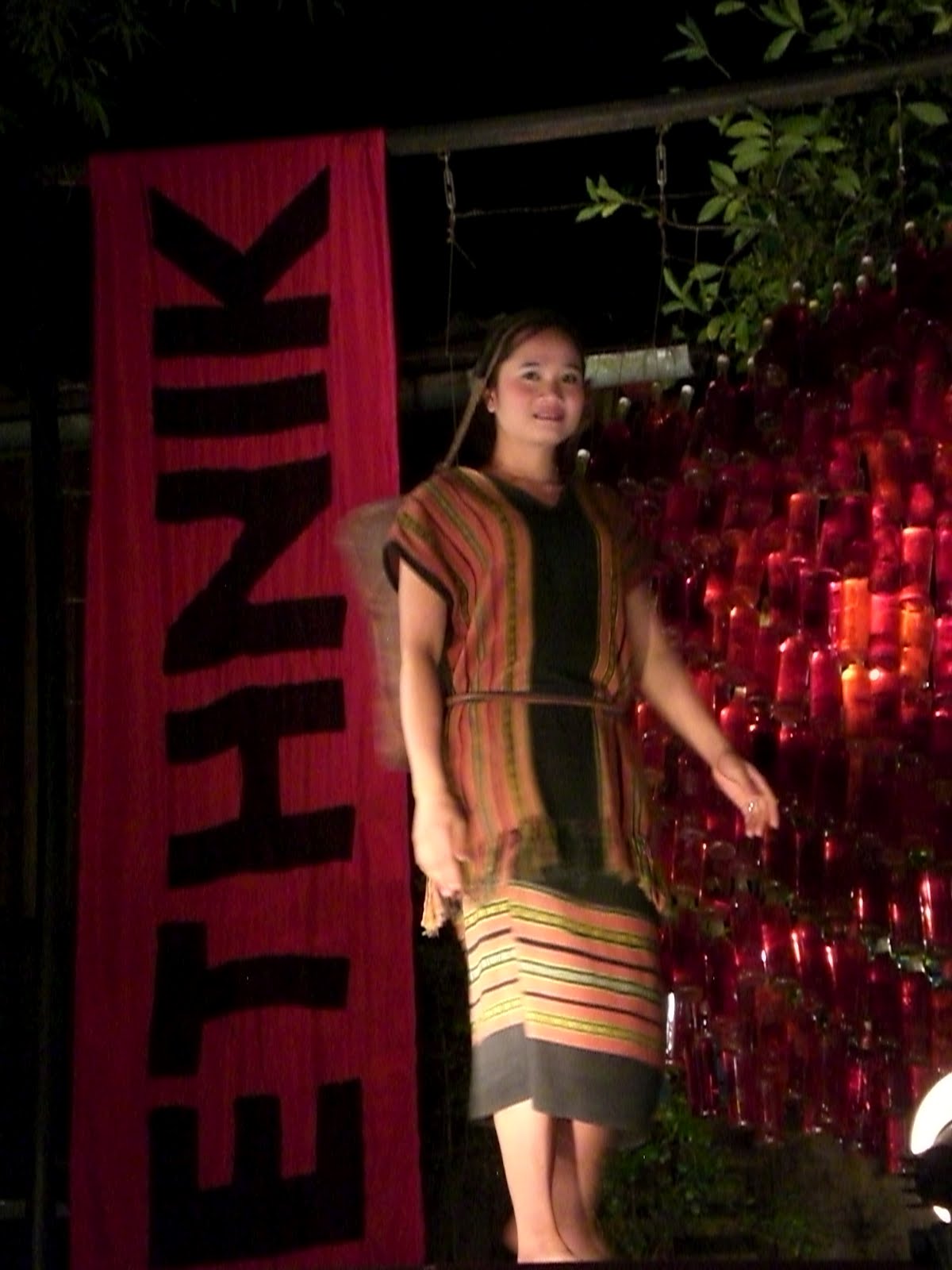
4. And not to be outdone by nature - cultural beauty. Laos has a very diverse population with lots of minority groups. On one hike, we passed through adjacent villages - first a Khmhmu and then Hmong - and our guide gave us an interesting introduction to their different marriage customs and housing styles. Luang Prabang has a great arts and ethnology center about some of those groups, and one of the restaurant/bars in town also puts on a spectacular fashion show of traditional costumes. The models are students who without their pay for this work would likely be unable to afford school fees and related costs - a great way to put tourist dollars to good work!


5. The variety of activities we did - hiking, biking, kayaking, caving, sightseeing, swimming in waterfalls, learning to cook Lao food, meeting Christa's students, getting massaged, shopping. . . really, what's not to love about any of that? Here are a couple more photos; full album coming soon!


Thursday, May 12, 2011

Catching up - Boseong

The other night I was spring cleaning my computer files and realized (again!) that many of my Korea experiences have not been chronicled on this blog. Partly for readers out there, and partly because this is the only form of journaling that I do, I'm going to try (again!) to catch up.

Today's post is a brief re-cap of a trip to Boseong in spring 2010. Boseong is one of Korea's prime green tea growing locations. Although it's in Chollanamdo, the province I lived in the first time I was in Korea, I never made it to Boseong until last year (with my old roommate from Mokpo, who still lives there). I think we visited a bit early in the season; I've seen pictures of lush green tea fields, and as you'll see, they were still showing signs of winter brown when we were there. Regardless, it was a great way to spend a lovely spring day with a couple of friends.

We started our visit with green tea ice cream:


On the way from the parking lot to the tea fields, we walked past this beautiful bamboo forest.


Then we hiked around exploring the tea fields for a while.


And after all that walking around, it was time for another green tea treat: a surprisingly yummy green tea latte.

Friday, May 6, 2011

Winter Travels

It's May 6th today, so obviously it's a bit late to be posting about my winter travels. Late, but not surprising, right? That's kind of the way things work on this blog.

In January, after a snowstorm in Philly that cancelled my flight and a 6-hour wait at 30th Street Station for a train to DC, where I was finally re-routed after hours on the phone with American Airlines, I returned to Seoul. All that waiting ate up the 24 hours that I was supposed to have to sleep in my own bed, do laundry, and re-pack before leaving for Tanzania. My friend Michelle saved the day; she took the list I e-mailed to her, went to my apartment to gather what I needed for Tanzania, and met me at the airport, where I had just over two hours to unpack/re-pack my bags and take off on my next flight.

Then that flight was late getting to Doha, Qatar, which meant I missed the once-a-day flight from Doha to Dar es Salaam, Tanzania. This time it was my friends Crystal and Michael who saved the day; they live in Doha and picked me up and hosted me at their apartment that night.

Once I finally got to Dar and then caught my domestic flight to Moshi, there was one more hitch. Paul, the guy who had arranged our Kilimanjaro trek and safari, did not meet me at the airport as planned. I had written down the name of the hotel and just took a taxi there, so that didn't seem to be such a big issue. My cousin Kirsten and our friend Eric were supposed to arrive later that night; I waited and waited and waited and began to worry about what had happened to them, unable to check flight status as the Internet was down. When we finally did connect the next morning, I found out that Paul had also failed to meet them; the guy who claimed he was there for Paul took them to a different hotel, and they had no idea where I was. As there were two of them and I was alone, they were even more worried than I had been!

Anyway, all's well that ends well, right? It did end well - we all made it safely to the summit of Kilimanjaro, and then met up with our cousin Nathaniel for an amazing safari and a few relaxing days on Zanzibar. Here's the photo story:
Tanzania


In February, Michelle (the one who saved me at the airport in January) and I flew to Jakarta, where our friend Nancy is teaching. My friend Leslie flew in from the States the next day, and Michelle, Leslie and I spent a few days with the orangutans in Borneo (or Kalimantan, as they say in Indonesia). From there we flew to Bali; Nancy, who was then off for the Chinese New Year, met us there for several days of fun and relaxation - and lots of good food and shopping and spa-ing! Michelle and Nancy each returned home from there, and Leslie and I hopped on a ferry to Lombok, where we hiked to a waterfall and did some amazing snorkeling around the Gili Islands. Here's that trip in pictures:
Indonesia

Saturday, March 12, 2011

"Responsible Tourism"

I read an interesting article in the New York Times this week that explores the idea of spending money wisely when abroad, especially in developing countries - a topic I brought up in my last post here. I don't agree with all of it, but both the article and readers' comments on it are thought provoking and worth a look. Here's the link for anyone who's interested: http://travel.nytimes.com/2011/03/13/travel/13prac.html

Monday, February 28, 2011

"You Work for Holidays; We Work for Food"

That's a quote from an interesting conversation with a taxi driver in Lombok, Indonesia a few weeks ago. It was near the end of an amazing trip with three great friends, and it left me feeling a bit sad and reflective.

I do a lot of my traveling in developing countries, and in those places I'm always struck by the inequality that exists in our world. Mostly at those moments I feel incredibly blessed, but there are also times when I sort of hate being the rich White Westerner. Sometimes that's because I feel a bit guilty for enjoying so much when so many others have so little. To be honest, though, it's usually because I'm being exorbitantly overcharged for something, which creates an inner dilemma: do I argue that I should pay the local price for the same product or service (like a taxi ride) that a local would, and do I try to avoid being one of the rich White Westerners who drives up the price for all of my fellow rich White Westerners to come after me? Or do I rationalize that the price difference (often a dollar or two, sometimes even less) wouldn't even cover the cost of a cup of coffee here in Seoul, but could buy, say, food for a day for an Indonesian taxi driver's family? More and more I find myself coming down on the latter side of that argument. I'd like to think it's because I'm becoming more compassionate as I grow older, but actually it's probably more due to the fact that I'm no longer a penny-pinching Peace Corps volunteer or grad student.

Obviously tourist dollars won't close the inequality gap, but I think they really do make a difference for those taxi drivers and market vendors who make a living that way. As we were preparing to leave our last campsite on Kilimanjaro (that's a topic for another post!), our guide thanked us for coming. He encouraged us to encourage our friends to visit Tanzania (and indeed, I encourage any of you reading this to go!), pointing out that visitors create jobs for people like him and our cook and our porters. After that, they all sang us this song:

Jambo, Jambo bwana (Hi, hi sir.)
Habari gani? (How are you?)
Mzuri sana (Very fine.)
Wageni mwakaribishwa (Visitors are welcome)
Kilimanjaro (Kilimanjaro!)
Hakuna matata (There are no worries)


(Thanks to fellow Kili climber Eric for the video and to http://www.museke.com/en/node/1125 for the lyrics and translation)

Thursday, November 4, 2010

Return to Jeju


Jeju is an island province that lies just to the south of the Korean peninsula. It's often referred to as "Korea's Hawaii," and it was for some time the honeymoon destination for Korean newlyweds. As the Korean economy has grown I think the honeymoon market has expanded to places like Phuket and Boracai, but Jeju remains a popular destination for mainland tourists.

I went to Jeju twice during my first stint in Korea. I've never been to Hawaii, but I think that comparison raised my expectations a bit too high, especially with regard to beaches. There are a couple of picturesque waterfalls, some pretty coastal scenery, and unique lava tube caves on the island; there's also lots of grass, which you don't see much of in Korea. So it's not Hawaii, but Jeju does make for a pleasant getaway.

The second time a visiting friend and I did a bit of hiking on Hallasan, the volcano in the center of the island, but due to bad weather and closed trails, we couldn't make it to the top. Though I'd pretty much exhausted the other highlights of the island, that mountain was always there to draw me back.

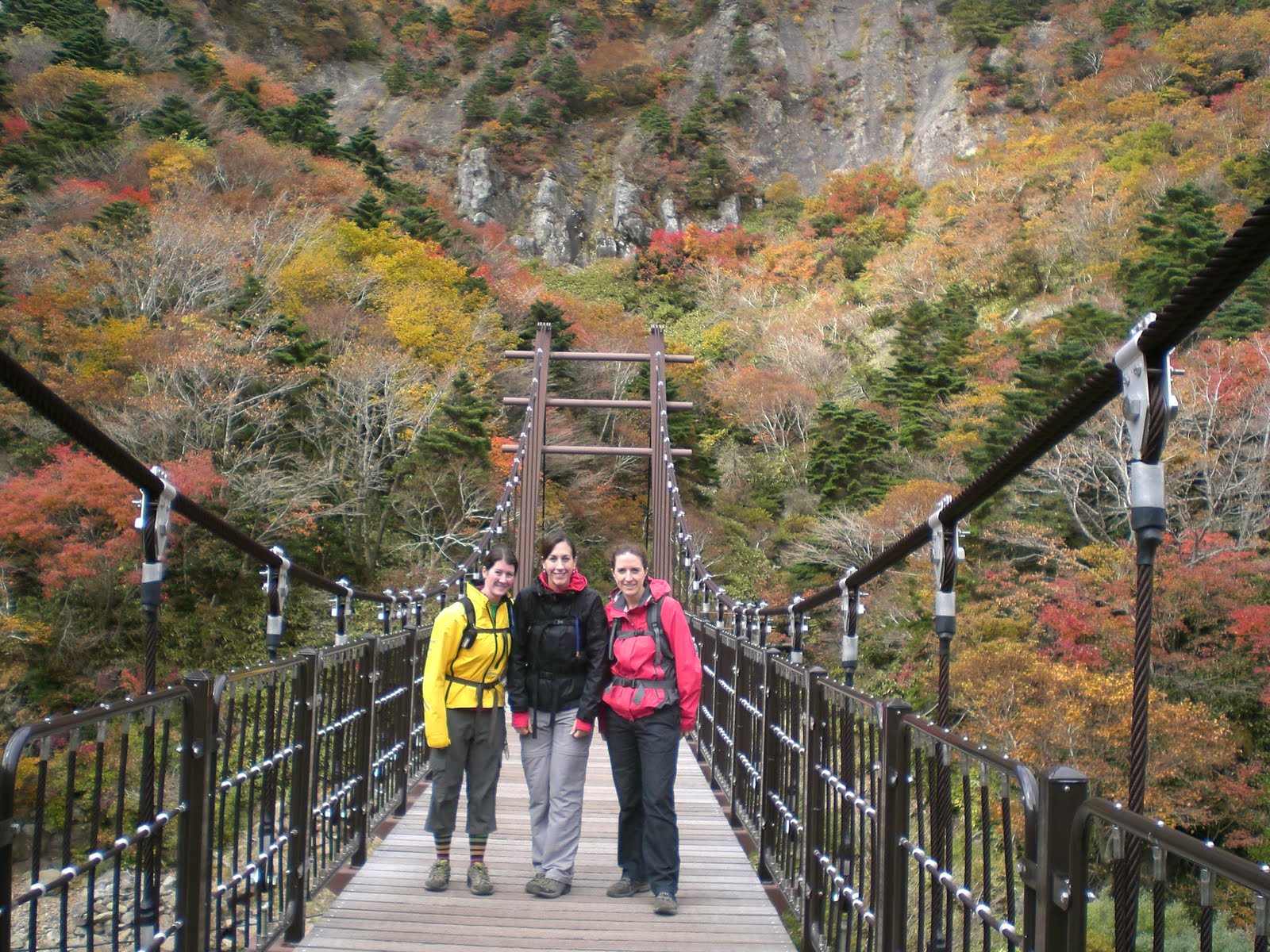
Enter a short mid-semester break, a couple of colleagues who share my affinity for hiking, and really cheap plane tickets, and you have my return to Hallasan, which is Korea's tallest mountain (1950 meters/6397 feet). Some stunning fall colors were a bonus, but even without them, our two full days of hiking would have been a worthwhile third trip!

Here we are near the high point on our first day's hike. In the distance behind us you can see the outer rim of the crater that's at the peak.


The next photo was taken about three hours into our hike on day two, followed by a couple of shots of the view near the peak.


I can't seem to get these pictures to line up here, but this is an attempt at a panoramic shot of the crater at the top:


Most photos that I've seen of Hallasan show a bright blue lake in the crater; I guess it must dry up in the fall/winter. We'll see how much longer I stay in Korea, but maybe one of these days I'll have to make one last trip to Jeju to see the lake!

Wednesday, June 16, 2010

Arab Lite II - Falcons

One of the highlights of my trip to the UAE was a visit to the falcon hospital outside Abu Dhabi. It's a bit off the beaten path, but tours have been growing in popularity and some days there are large groups of visitors - so we were happy when we arrived to find we had the whole place to ourselves.

Arab sheikhs spare no expense when it comes to their massive month-long hunting expeditions (setting up huge camps in places like Kazakhstan and Kyrgyzstan, for men only of course), or when it comes to buying or caring for their birds. The hospital takes care of falcons from all over the world, but mainly from Saudi Arabia and the Gulf States; they offer veterinary services and boarding facilities (which are air-conditioned!).

Good hunting falcons are not cheap; this one, which belongs to the hospital, is at the low end of the price range: about $20,000.


We got to watch a falcon be anesthetized, then have its blood drawn and talons clipped:


Here's a falcon with a damaged wing, and another that had its feet bandaged:


The staff also explained how they replace feathers. They have a very carefully organized selection of replacement feathers (which need to be matched perfectly by size, type of feather, and position to achieve proper balance for flight - and by color to keep the owner happy).


The feather repair kit includes - no joke - Superglue!

Sunday, May 23, 2010

Arab Lite - Part I

Except for Jordan and Israel, the Middle East has never been high on the list of places I want to visit. I have two friends living there though, and as I knew it would be fun to catch up with them - and that it would be warm and sunny in February - off I went to the United Arab Emirates and Qatar! Now that I've been there, of course, I want to see more. Lebanon, Syria, and Oman have been added to my wish list.

Yes, the trip was in February and it's May now. Rather than procrastinate any longer, I've decided to tackle the blog entries in bite-size chunks. Today's topic:

The Gulf
I always pictured the water in the Persian Gulf looking a bit like the ocean off coast of New Jersey - sort of brown and uninspiring. I could not have been more wrong! Here's a shot of Jumeirah Beach in Dubai:


And here's a city beach in Abu Dhabi:


Still to come: falcons, mosques and Muslims, the Empty Quarter . . .

Friday, May 7, 2010

Puno and Pictures from Peru

At long last, the final installment on my winter trip to Peru:

After flying, biking, and hiking, we added bus and boat to our modes of transportation in Peru. The bus was a tourist coach from Cusco to Puno that made stops along the way at the Sistine Chapel of South America (beautiful paintings on the ceiling, but while I haven't seen the actual Sistine Chapel, I'm pretty sure the Peruvian one pales in comparison), a small museum, a high mountain pass, and some Inca ruins.

Puno is a small city on the shore of Lake Titicaca, the starting point for many tours of the lake. We did a two-day tour, visiting the man-made floating Uros Islands, Amantani Island, where we spent the night, and Tequile Island.

The Uros originally created their floating islands to keep a safe distance from the Incas; currently some of the people still live, work, and attend school on the islands, but many of them live in Puno and just go out to the islands each day to play host to tourists - and to rip them off.

Our visit to the Uros started out well. The president of one of the islands explained some of their traditions and showed us a model of how the islands are constructed. We poked our heads into some of the huts, took a few photos, and then, at our guide's instruction, climbed into this boat:


Our whole group (about 25 people) took off with an Uros gondolier and a boy who sang songs in several languages ("Twinkle, Twinkle, Little Star" in English) and then passed his hat around for donations. That wasn't SO bad, but then, in the middle of the lake, the gondolier stopped and told us we had to pay him 5 soles each (about $2) before he'd take us to the next island, where our big boat was waiting for us. Obviously $2 is not a lot of money, but we protested on principle, pointing out that we'd payed for an all-inclusive tour and that no one had told us that we'd have to pay extra for this boat ride. He repeatedly insisted that it was not included and told us he needed the money for maintenance of the boat - but that wasn't very convincing as it was made out the the same reeds as the islands themselves - reeds which grow naturally all around the area. Finally a few people paid; most of us refused, but he gave up and took us back to our boat and our guide. More arguing ensued and most of us ended up paying (though NO ONE in our group - English or Spanish speakers - had heard what our guide claimed he told us about the extra fee). Later, back in Puno, we complained to the people we'd booked our tour with, but I doubt it did much good. It's just so frustrating to know that they probably do the same thing day after day, souring an otherwise lovely tour of Lake Titicaca.

Next up was Amantani Island, where we spent the night with a local host family. Our rooms were basic; there was no electricity and we had to bucket-flush the toilet, but the food was good and the beds were comfortable enough and we really enjoyed the stay. The afternoon we arrived, we hiked to Pachatata, one of the island's high points. The views were stunning and while the high altitude (Lake Titicac is at 12,500 feet) made the walk a bit challenging, we really enjoyed it. It was so good, in fact, that Kirsten, Eric and I got up at 5:00 the next morning to walk up to Pachamama, the island's other high point, before breakfast.

After breakfast, we boarded the boat again and headed for Tequile Island, where we walked around a bit and ate a really tasty fish lunch. From there it was back on the boat to Puno.

We flew back to Lima the next morning. Kirsten and I had our return flight to Atlanta late that same night, but we managed to see more of the city in the meantime, including the Lima Zoo. Highlights there were the condors and - after literally hours of searching and finally encountering a friendly zookeeper who took us behind the cages after they were technically closed for the day - a couple of beautiful pumas.

And now, Peru in pictures:

Peru

Wednesday, March 10, 2010

Spring Snow


I know it's not technically spring yet, but it's been warm here in Seoul and I've been thinking that soon it will be cherry blossom time. Not yet, I guess! This is what the trees on campus looked like today.

Sunday, February 21, 2010

Cusco and Machu Picchu

Kirsten and I flew from Lima to Cusco, one-time power center of the Inca empire and currently the hub of Machu Picchu tourism. With its clean air, imposing churches, whitewashed homes built on Inca stone foundations, and quaint squares, Cusco is a definite step up from the capital.


We toured a couple of good museums in Cusco (lots of Inca artifacts, as well as some from other native tribes), walked through the central market (vegetables, flowers, housewares, and a meat section that made me briefly consider becoming a vegetarian for the remainder of our trip), and wandered around the streets and alleys, all the while adjusting to the altitude of 11,000 feet.

Our second day in Cusco, we met our travel partners. In one of many trip-planning e-mails, Kirsten told me that her coworker's brother and his friend were thinking about traveling in Peru, and that she'd invited them to join us if the timing worked out. She added something like, "I hope you don't mind, and don't worry; if they turn out to be tools, we can just tell them we want to do our own thing." As we got to know Jeremy and Eric, we were happy to learn that they are not tools; they're both fun and easy-going and we were glad to have them along (and not merely for Eric's pharmaceutical knowledge and supply of medicine, which came in handy when Kirsten got sick on the way to Machu Picchu).

The day after they arrived, we were off on our four-day bike/hike to Machu Picchu. We started out in a minivan that picked us up an hour late, stopped by a couple of other hotels, and then waited, inexplicably, for about an hour on the side of a Cusco street. Eventually we were on our way out of town and into the beautiful countryside. We made a brief bathroom/shopping stop, and soon after that started going up (and up and up) some switchbacks that didn't agree with Jeremy's stomach.

We got out of the van at about noon and climbed on our mountain bikes to begin a descent of just over 10,000 feet. Soon after we started, Jeremy turned to Eric to tell him that his stomach troubles had subsided and that he was feeling the best he had all day. Immediately after that he veered into the cement ditch, tearing some skin off his elbow but otherwise unhurt. The ride was easy in that it was downhill, but not long after we started it began to rain - lightly at first, and then a downpour. Then heavy fog rolled in, making me more than a little nervous about the buses and trucks that were speeding up the same switchbacks that we were going down, often in the middle of the road, and sometimes with steep drop-offs on one side. I think later on Eric used the word "exhilarating" to describe the ride. If I had to describe it in one word, it would probably be "terrifying." Or maybe "freezing." We started out at over 14,000 feet, and it was chilly up there, even before the rain. I had a waterproof jacket, but still felt pretty much soaked to the bone from the downpour. Even after the rain lightened up, we ended up with sopping wet socks and boots when we crossed at points like the one below. (Water-proof boots are not so waterproof when the water comes in over the top!) For a while I was shivering and my teeth were chattering; there was a safety van always backing us up, but of course I was too stubborn and proud to give up and ride in it. Thankfully the steep descent meant that it gradually got warmer and warmer, and toward the end of the three-hour ride the rain stopped completely and the sun came out.


We spent that night in a village called Santa Maria. I slept well, but it was a miserable night for Kirsten; it seemed her stomach was not happy with something she had eaten or drunk the day before and she had to make several trips to the bathroom, to a toilet that had no seat and that didn't always flush. Here's where Eric's drug supply came in handy; in the morning she popped some pills, put on a brave face, and insisted that she would be fine - but before long it was clear that she was really in no shape to hike. The first part of our route that day was along a dirt road, and our guide was able to flag down a taxi/bus passing by to take Kirsten to Santa Teresa, where we'd spend our second night. Soon after she got in the car, the rest of us turned off the road and onto an Inca trail. Not THE Inca Trail, mind you (it's necessary to book that 9 months - 1 year in advance), but a section of the many, many miles of trail network that has survived since Inca times.


Day three was less eventful. Kirsten was still running at much less than 100%, and she didn't manage to keep her breakfast down, but she did soldier on and survived the day's hike. The walk that day was mostly level, making it much easier than the hills we'd covered on the previous day. The last two hours or so we were walking along railroad tracks, which was too bad because in looking down to be sure we didn't stumble on stones or railroad ties, it was hard to fully appreciate the spectacular scenery that was surrounding us.

By mid-afternoon we had checked into our hotel in Aguas Calientes (which, incidentally, featured a roaring river directly below our windows, one which later caused some of the damage I mentioned in my previous post). After hot showers (the first in three days!), we wandered around town a bit. In one of the town squares, we saw a Swiss guy named Frederic that had been on our van the first morning and whom we'd since seen several times along the path, always alone. We invited him to join us for a beer; he accepted, and the fact that he doesn't speak much English and none of us speaks French made for some entertaining conversation. Just one example: before Peru, Frederic had been traveling in Bolivia (which of course, I am now dying to visit.). He was trying to tell us something about a market in La Paz, but when we weren't getting it, he stood up and tried body language. Motions which we later realized were meant to be a witch riding a broomstick looked - well, sort of lewd. His Spanish was better than his English, so at some points Kirsten translated; when she repeated Jeremy's guess of "sex market?" in response to that obscure body language, the Swiss guy turned red and quickly waved his hands and shook his head in protest saying, "no, no, no - not me!" We never did figure out what the witch had to do with the La Paz market, but we did all got a good laugh out of it.

We woke up before dawn on day four to wait for the first bus from Aguas Calientes to Machu Picchu. The line was long, even at 5 am, and it was raining; once again I was wet and cold (and, to be honest, a little grumpy; it didn't help that this all took place without my usual morning coffee). We waited for about half an hour, rode the bus for twenty minutes, and then stood in a long line again at the ticket booth. Our first views of the ruins were shrouded in fog, but nonetheless incredible; all that waiting had paid off! Soon the sun came out, my caffeine kicked in (still no coffee, but Diet Coke will do in a pinch), and we commenced a day of wandering around the ruins, first with a guide and then continuing on our own. Jeremy ended up taking another spill that afternoon - slipping on a wet rock, breaking his camera, scraping his hand, and badly bruising his shoulder. I can't speak for him or for Kirsten, but I'm pretty sure they'd both agree that the chance to see Machu Picchu was well worth not only the morning wait in the rain, but also the cuts and bruises, the time spent in rather unpleasant bathrooms and some grueling moments along the trail.

I'll post a captioned photo album soon, but here's a preview: our first, foggy view of the ruins, and then the same view later in the sunshine.


Thursday, February 4, 2010

News from Peru & Day One

Before I get to my own trip, I want to say a bit about what's happened in Peru in the few weeks since I was there. You've most likely heard about the intense rains and the landslides and the tourists who had to be evacuated from Aguas Calientes (a.k.a. Machu Picchu Pueblo), but here's a quick recap anyway. Machu Picchu itself is high on a mountain; there's a swanky, $1,000/night lodge up there, but most people stay in Aguas Calientes, a village of hotels, restaurants, and souvenir shops which is in a valley below the ruins. Only official shuttle buses make the 20-minute trip between the two; the photo below shows Machu Picchu and just a few of the many switchbacks on the road down to Aguas Calientes.


There are only two ways into (and out of) Aguas Calientes: on foot or by train; tourists got stuck there a couple of weeks ago when a landslide took out a portion of the railway. The first news I read basically just said that tourists were trapped there until the weather cleared and they could be helicoptered out; I thought "ok, so a bit of inconvenience and extra expense, but that's not so bad." Then I read that Machu Picchu would be closed for a short period and I thought, "ooh, that is bad." I can't imagine how disappointing it would be to get all the way to Peru - or even to Aguas Calientes, as some hikers did - and then to miss out on the highlight of the whole trip! The other night I searched for the latest on what was happening and was surprised and saddened to read that a couple of hikers and one guide had been killed (by falling rocks and in a tent washed away overnight) along the Inca Trail. Reports now are that Machu Picchu might be closed for weeks or even months, which will be a real blow to the economy in an area that relies heavily on tourism. Many Peruvians have lost their homes or their crops.

So, I'm a bit sobered as I reflect on the time I spent in Peru. We had some of the usual travel frustrations, like waiting for luggage and for people; we also got DRENCHED (it is rainy season, after all) and had to do some of our hiking in wet socks and boots. I got some extremely itchy bug bites (but only a few of them; one of the guys traveling with us was covered from foot to knee), and there were also a couple of disputes with our tour guides as to what we had or had not paid for in advance. The recent news from Peru has helped me to put those issues in perspective, though, and has made me truly thankful for safety and for such an enjoyable experience in the beautiful country of Peru.

Ok, now to day one of our trip. Lima is one of those cities that you visit out of necessity because it happens to be home to the nation's major international airport; we ended up spending two days there (one at each end of the trip). It's by no means the most exciting place I've ever been, but we did find plenty to keep us occupied. We also had really good food, and that always helps!

On our first day, my cousin Kirsten and I walked and walked and walked around the city. We started out wandering around central Lima, where we marveled at the intricately carved wooden balconies and inhaled the wafting scents of barbecue and soaked up the warmth of the sun, and where we toured the Iglesia de San Francisco, pictured below. In the catacombs beneath the church, the bones of people buried there are arranged in rather macabre displays. We weren't allowed to take photos, but you can see one here.


After the catacombs tour we found a simple basement restaurant that served heaping portions of some fabulous ceviche (a Peruvian specialty: raw fish soaked in a lime marinade). Our plan for the afternoon was to tour a couple of museums, but all three that we tried to visit were closed - one for renovation and the others, presumably, for the New Year holiday. The three museums were sort of spread out around the city, which was one reason for all the walking we did. To be honest, though, we also had a bit of trouble reading our maps.

In the evening, we walked and walked and walked some more. Suffice it to say that we had a little trouble with the map again - but we did eventually make it (after asking some friendly locals for directions and then taking a bus) to Miraflores, a Lima suburb on the coast. We had dinner there in a restaurant recommended in our guide book and then, to celebrate New Year's Eve, sat at an outdoor table overlooking the Pacific and sipped fruity pisco (sort of like Peruvian tequila) cocktails. We actually finished our drinks and headed back to our quiet colonial house-turned-hotel before 12:00, but were still awake when the fireworks went off at midnight - and continued for a considerable time after that.

I'd like to make it clear that Kirsten and I are not getting too old to stay up on New Year's Eve or anything; it's just that we had to get up early the next day for our flight to Cusco.

And have I mentioned that we'd been walking pretty much all day?