Sunday, May 23, 2010

Arab Lite - Part I

Except for Jordan and Israel, the Middle East has never been high on the list of places I want to visit. I have two friends living there though, and as I knew it would be fun to catch up with them - and that it would be warm and sunny in February - off I went to the United Arab Emirates and Qatar! Now that I've been there, of course, I want to see more. Lebanon, Syria, and Oman have been added to my wish list.

Yes, the trip was in February and it's May now. Rather than procrastinate any longer, I've decided to tackle the blog entries in bite-size chunks. Today's topic:

The Gulf
I always pictured the water in the Persian Gulf looking a bit like the ocean off coast of New Jersey - sort of brown and uninspiring. I could not have been more wrong! Here's a shot of Jumeirah Beach in Dubai:


And here's a city beach in Abu Dhabi:


Still to come: falcons, mosques and Muslims, the Empty Quarter . . .

Friday, May 7, 2010

Puno and Pictures from Peru

At long last, the final installment on my winter trip to Peru:

After flying, biking, and hiking, we added bus and boat to our modes of transportation in Peru. The bus was a tourist coach from Cusco to Puno that made stops along the way at the Sistine Chapel of South America (beautiful paintings on the ceiling, but while I haven't seen the actual Sistine Chapel, I'm pretty sure the Peruvian one pales in comparison), a small museum, a high mountain pass, and some Inca ruins.

Puno is a small city on the shore of Lake Titicaca, the starting point for many tours of the lake. We did a two-day tour, visiting the man-made floating Uros Islands, Amantani Island, where we spent the night, and Tequile Island.

The Uros originally created their floating islands to keep a safe distance from the Incas; currently some of the people still live, work, and attend school on the islands, but many of them live in Puno and just go out to the islands each day to play host to tourists - and to rip them off.

Our visit to the Uros started out well. The president of one of the islands explained some of their traditions and showed us a model of how the islands are constructed. We poked our heads into some of the huts, took a few photos, and then, at our guide's instruction, climbed into this boat:


Our whole group (about 25 people) took off with an Uros gondolier and a boy who sang songs in several languages ("Twinkle, Twinkle, Little Star" in English) and then passed his hat around for donations. That wasn't SO bad, but then, in the middle of the lake, the gondolier stopped and told us we had to pay him 5 soles each (about $2) before he'd take us to the next island, where our big boat was waiting for us. Obviously $2 is not a lot of money, but we protested on principle, pointing out that we'd payed for an all-inclusive tour and that no one had told us that we'd have to pay extra for this boat ride. He repeatedly insisted that it was not included and told us he needed the money for maintenance of the boat - but that wasn't very convincing as it was made out the the same reeds as the islands themselves - reeds which grow naturally all around the area. Finally a few people paid; most of us refused, but he gave up and took us back to our boat and our guide. More arguing ensued and most of us ended up paying (though NO ONE in our group - English or Spanish speakers - had heard what our guide claimed he told us about the extra fee). Later, back in Puno, we complained to the people we'd booked our tour with, but I doubt it did much good. It's just so frustrating to know that they probably do the same thing day after day, souring an otherwise lovely tour of Lake Titicaca.

Next up was Amantani Island, where we spent the night with a local host family. Our rooms were basic; there was no electricity and we had to bucket-flush the toilet, but the food was good and the beds were comfortable enough and we really enjoyed the stay. The afternoon we arrived, we hiked to Pachatata, one of the island's high points. The views were stunning and while the high altitude (Lake Titicac is at 12,500 feet) made the walk a bit challenging, we really enjoyed it. It was so good, in fact, that Kirsten, Eric and I got up at 5:00 the next morning to walk up to Pachamama, the island's other high point, before breakfast.

After breakfast, we boarded the boat again and headed for Tequile Island, where we walked around a bit and ate a really tasty fish lunch. From there it was back on the boat to Puno.

We flew back to Lima the next morning. Kirsten and I had our return flight to Atlanta late that same night, but we managed to see more of the city in the meantime, including the Lima Zoo. Highlights there were the condors and - after literally hours of searching and finally encountering a friendly zookeeper who took us behind the cages after they were technically closed for the day - a couple of beautiful pumas.

And now, Peru in pictures:

Peru

Wednesday, March 10, 2010

Spring Snow


I know it's not technically spring yet, but it's been warm here in Seoul and I've been thinking that soon it will be cherry blossom time. Not yet, I guess! This is what the trees on campus looked like today.

Sunday, February 21, 2010

Cusco and Machu Picchu

Kirsten and I flew from Lima to Cusco, one-time power center of the Inca empire and currently the hub of Machu Picchu tourism. With its clean air, imposing churches, whitewashed homes built on Inca stone foundations, and quaint squares, Cusco is a definite step up from the capital.


We toured a couple of good museums in Cusco (lots of Inca artifacts, as well as some from other native tribes), walked through the central market (vegetables, flowers, housewares, and a meat section that made me briefly consider becoming a vegetarian for the remainder of our trip), and wandered around the streets and alleys, all the while adjusting to the altitude of 11,000 feet.

Our second day in Cusco, we met our travel partners. In one of many trip-planning e-mails, Kirsten told me that her coworker's brother and his friend were thinking about traveling in Peru, and that she'd invited them to join us if the timing worked out. She added something like, "I hope you don't mind, and don't worry; if they turn out to be tools, we can just tell them we want to do our own thing." As we got to know Jeremy and Eric, we were happy to learn that they are not tools; they're both fun and easy-going and we were glad to have them along (and not merely for Eric's pharmaceutical knowledge and supply of medicine, which came in handy when Kirsten got sick on the way to Machu Picchu).

The day after they arrived, we were off on our four-day bike/hike to Machu Picchu. We started out in a minivan that picked us up an hour late, stopped by a couple of other hotels, and then waited, inexplicably, for about an hour on the side of a Cusco street. Eventually we were on our way out of town and into the beautiful countryside. We made a brief bathroom/shopping stop, and soon after that started going up (and up and up) some switchbacks that didn't agree with Jeremy's stomach.

We got out of the van at about noon and climbed on our mountain bikes to begin a descent of just over 10,000 feet. Soon after we started, Jeremy turned to Eric to tell him that his stomach troubles had subsided and that he was feeling the best he had all day. Immediately after that he veered into the cement ditch, tearing some skin off his elbow but otherwise unhurt. The ride was easy in that it was downhill, but not long after we started it began to rain - lightly at first, and then a downpour. Then heavy fog rolled in, making me more than a little nervous about the buses and trucks that were speeding up the same switchbacks that we were going down, often in the middle of the road, and sometimes with steep drop-offs on one side. I think later on Eric used the word "exhilarating" to describe the ride. If I had to describe it in one word, it would probably be "terrifying." Or maybe "freezing." We started out at over 14,000 feet, and it was chilly up there, even before the rain. I had a waterproof jacket, but still felt pretty much soaked to the bone from the downpour. Even after the rain lightened up, we ended up with sopping wet socks and boots when we crossed at points like the one below. (Water-proof boots are not so waterproof when the water comes in over the top!) For a while I was shivering and my teeth were chattering; there was a safety van always backing us up, but of course I was too stubborn and proud to give up and ride in it. Thankfully the steep descent meant that it gradually got warmer and warmer, and toward the end of the three-hour ride the rain stopped completely and the sun came out.


We spent that night in a village called Santa Maria. I slept well, but it was a miserable night for Kirsten; it seemed her stomach was not happy with something she had eaten or drunk the day before and she had to make several trips to the bathroom, to a toilet that had no seat and that didn't always flush. Here's where Eric's drug supply came in handy; in the morning she popped some pills, put on a brave face, and insisted that she would be fine - but before long it was clear that she was really in no shape to hike. The first part of our route that day was along a dirt road, and our guide was able to flag down a taxi/bus passing by to take Kirsten to Santa Teresa, where we'd spend our second night. Soon after she got in the car, the rest of us turned off the road and onto an Inca trail. Not THE Inca Trail, mind you (it's necessary to book that 9 months - 1 year in advance), but a section of the many, many miles of trail network that has survived since Inca times.


Day three was less eventful. Kirsten was still running at much less than 100%, and she didn't manage to keep her breakfast down, but she did soldier on and survived the day's hike. The walk that day was mostly level, making it much easier than the hills we'd covered on the previous day. The last two hours or so we were walking along railroad tracks, which was too bad because in looking down to be sure we didn't stumble on stones or railroad ties, it was hard to fully appreciate the spectacular scenery that was surrounding us.

By mid-afternoon we had checked into our hotel in Aguas Calientes (which, incidentally, featured a roaring river directly below our windows, one which later caused some of the damage I mentioned in my previous post). After hot showers (the first in three days!), we wandered around town a bit. In one of the town squares, we saw a Swiss guy named Frederic that had been on our van the first morning and whom we'd since seen several times along the path, always alone. We invited him to join us for a beer; he accepted, and the fact that he doesn't speak much English and none of us speaks French made for some entertaining conversation. Just one example: before Peru, Frederic had been traveling in Bolivia (which of course, I am now dying to visit.). He was trying to tell us something about a market in La Paz, but when we weren't getting it, he stood up and tried body language. Motions which we later realized were meant to be a witch riding a broomstick looked - well, sort of lewd. His Spanish was better than his English, so at some points Kirsten translated; when she repeated Jeremy's guess of "sex market?" in response to that obscure body language, the Swiss guy turned red and quickly waved his hands and shook his head in protest saying, "no, no, no - not me!" We never did figure out what the witch had to do with the La Paz market, but we did all got a good laugh out of it.

We woke up before dawn on day four to wait for the first bus from Aguas Calientes to Machu Picchu. The line was long, even at 5 am, and it was raining; once again I was wet and cold (and, to be honest, a little grumpy; it didn't help that this all took place without my usual morning coffee). We waited for about half an hour, rode the bus for twenty minutes, and then stood in a long line again at the ticket booth. Our first views of the ruins were shrouded in fog, but nonetheless incredible; all that waiting had paid off! Soon the sun came out, my caffeine kicked in (still no coffee, but Diet Coke will do in a pinch), and we commenced a day of wandering around the ruins, first with a guide and then continuing on our own. Jeremy ended up taking another spill that afternoon - slipping on a wet rock, breaking his camera, scraping his hand, and badly bruising his shoulder. I can't speak for him or for Kirsten, but I'm pretty sure they'd both agree that the chance to see Machu Picchu was well worth not only the morning wait in the rain, but also the cuts and bruises, the time spent in rather unpleasant bathrooms and some grueling moments along the trail.

I'll post a captioned photo album soon, but here's a preview: our first, foggy view of the ruins, and then the same view later in the sunshine.


Thursday, February 4, 2010

News from Peru & Day One

Before I get to my own trip, I want to say a bit about what's happened in Peru in the few weeks since I was there. You've most likely heard about the intense rains and the landslides and the tourists who had to be evacuated from Aguas Calientes (a.k.a. Machu Picchu Pueblo), but here's a quick recap anyway. Machu Picchu itself is high on a mountain; there's a swanky, $1,000/night lodge up there, but most people stay in Aguas Calientes, a village of hotels, restaurants, and souvenir shops which is in a valley below the ruins. Only official shuttle buses make the 20-minute trip between the two; the photo below shows Machu Picchu and just a few of the many switchbacks on the road down to Aguas Calientes.


There are only two ways into (and out of) Aguas Calientes: on foot or by train; tourists got stuck there a couple of weeks ago when a landslide took out a portion of the railway. The first news I read basically just said that tourists were trapped there until the weather cleared and they could be helicoptered out; I thought "ok, so a bit of inconvenience and extra expense, but that's not so bad." Then I read that Machu Picchu would be closed for a short period and I thought, "ooh, that is bad." I can't imagine how disappointing it would be to get all the way to Peru - or even to Aguas Calientes, as some hikers did - and then to miss out on the highlight of the whole trip! The other night I searched for the latest on what was happening and was surprised and saddened to read that a couple of hikers and one guide had been killed (by falling rocks and in a tent washed away overnight) along the Inca Trail. Reports now are that Machu Picchu might be closed for weeks or even months, which will be a real blow to the economy in an area that relies heavily on tourism. Many Peruvians have lost their homes or their crops.

So, I'm a bit sobered as I reflect on the time I spent in Peru. We had some of the usual travel frustrations, like waiting for luggage and for people; we also got DRENCHED (it is rainy season, after all) and had to do some of our hiking in wet socks and boots. I got some extremely itchy bug bites (but only a few of them; one of the guys traveling with us was covered from foot to knee), and there were also a couple of disputes with our tour guides as to what we had or had not paid for in advance. The recent news from Peru has helped me to put those issues in perspective, though, and has made me truly thankful for safety and for such an enjoyable experience in the beautiful country of Peru.

Ok, now to day one of our trip. Lima is one of those cities that you visit out of necessity because it happens to be home to the nation's major international airport; we ended up spending two days there (one at each end of the trip). It's by no means the most exciting place I've ever been, but we did find plenty to keep us occupied. We also had really good food, and that always helps!

On our first day, my cousin Kirsten and I walked and walked and walked around the city. We started out wandering around central Lima, where we marveled at the intricately carved wooden balconies and inhaled the wafting scents of barbecue and soaked up the warmth of the sun, and where we toured the Iglesia de San Francisco, pictured below. In the catacombs beneath the church, the bones of people buried there are arranged in rather macabre displays. We weren't allowed to take photos, but you can see one here.


After the catacombs tour we found a simple basement restaurant that served heaping portions of some fabulous ceviche (a Peruvian specialty: raw fish soaked in a lime marinade). Our plan for the afternoon was to tour a couple of museums, but all three that we tried to visit were closed - one for renovation and the others, presumably, for the New Year holiday. The three museums were sort of spread out around the city, which was one reason for all the walking we did. To be honest, though, we also had a bit of trouble reading our maps.

In the evening, we walked and walked and walked some more. Suffice it to say that we had a little trouble with the map again - but we did eventually make it (after asking some friendly locals for directions and then taking a bus) to Miraflores, a Lima suburb on the coast. We had dinner there in a restaurant recommended in our guide book and then, to celebrate New Year's Eve, sat at an outdoor table overlooking the Pacific and sipped fruity pisco (sort of like Peruvian tequila) cocktails. We actually finished our drinks and headed back to our quiet colonial house-turned-hotel before 12:00, but were still awake when the fireworks went off at midnight - and continued for a considerable time after that.

I'd like to make it clear that Kirsten and I are not getting too old to stay up on New Year's Eve or anything; it's just that we had to get up early the next day for our flight to Cusco.

And have I mentioned that we'd been walking pretty much all day?

Saturday, January 23, 2010

Beyond the Sky and the Earth


So it's a new year, and once again I've resolved to blog here more consistently. I always appreciate comments on or about the blog, but I'm not that concerned, really, with how many people read these posts. I just know that the details fade fast, and that if I don't make a written record of my travels and of my life in Seoul now, the memories will be fuzzy later.

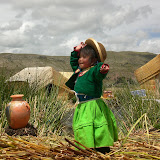
My blogging resolution was reinforced by a book I just finished - and actually this post will be sort of a report on that book rather than a description of my latest journey (an amazing trip to Peru, which I WILL write about soon; the picture above, from Lake Titicaca, is a preview). Beyond the Sky and the Earth is the memoirs of a Canadian teacher's three years in the tiny Himalayan kingdom of Bhutan. (Thanks to my high school friends Sarah and Sarah for recommending the book!) I loved it for several reasons; one is simply the fact that Jamie Zeppa's descriptions of Bhutan - of the mountains and the complete quiet and dark that you can feel in a Himalayan village, of the people and their warm curiosity, of nerve-racking rides in buses, loaded with people and chickens and tubs of kerosene, that lurch and sway over narrow clearings through recent landslides with long, steep drops below - brought back such vivid memories of my trips to Nepal, which are, hands-down, the best I've ever taken.

Mostly, though, I loved it because she articulated so many of the sentiments that I've experienced in my expat life, especially during my two years in Armenia. She explains the oddity of longing (and I really don't think it's an exaggerated use of that word) for a bagel, then returning "home" and eating one, only to find herself craving the simple foods she ate day after day in Bhutan (or, in my case, Armenia: salty homemade cheese and fresh bread and tiny cups of sweet Turkish coffee).

She explains how overwhelming it is to return to North America and be confronted with the sheer amount of stuff that people have, and with the number of choices there are in the cereal aisle. And how it suddenly seems so wasteful to see so many cars each carrying but one person down the road.

She explains how, when people ask what Bhutan is like, she always seems to say too much or too little, and to walk away from those conversations feeling like the other party doesn't really get it. That just happened to me in Peru, actually. Somehow it came up that Nepal tops my list of been-to destinations, and I tried to explain why I found it so magical. Even though I was talking to other people who share my love for travel, even though we were, at the time of the conversation, traveling in another spectacular, fascinating, mystical place, I'm pretty sure I failed to make them understand.

She explains how hard it is to live in a village where everyone knows everything that you do, even if you have nothing to hide. A co-teacher in Armenia once told me that her daughter had seen me in a store a few months back - and that I had bought markers, and that her daughter had been surprised that I was able to ask for them in Armenian. Harmless stuff, of course, but I sometimes hated the sense that people were watching so closely. Another time, a woman who lived in the building next to mine asked why I burned candles in my apartment. I don't think she suspected a seance or some sort of other odd behavior; she was probably just surprised that I didn't find it wasteful to use candles and electricity at the same time. (Shouldn't the former be saved for a time when the latter went out?) I don't think she had binoculars or anything either, but it did weird me out a little bit that she was peering into my windows that carefully.

So many details like that resonated with me, but I think even people who haven't shared the same sort of experience can probably appreciate the author's explanation of how living in another place can change not only your perspective, but your sense of self and of your place in the world. I think she's absolutely right.

For the record (in case anyone hunts it down based on what I've written here): the book's ending is disappointing. Nevertheless, it's a good read. It's a good explanation of what makes traveling so awesome, and a good reminder to me that someday when I'm reminiscing, my travel memories will be much more vivid if I have a record of them in writing.

Friday, November 20, 2009

The Philippines, part II

After a six-month hiatus, I've resolved to get back to blogging! Way back when I wrote about Manila, but I never posted about the rest of my trip to the Philippines in February. Finally, here is the second installment.


My cousin Kirsten and I spent most of our time together in the Philippines in the Cordillera mountain range, which is north of Manila on North Luzon Island. We started out from Manila on an overnight bus to the sprawling highland city of Baguio. That wasn't our original plan (it changed because I bought our bus tickets based on the erroneous advice of our hotel owner), but actually I think the revised itinerary was probably better anyway.

We arrived in Bagiou EARLY in the morning at a clean, new bus station. We had a cup of coffee there and waited for the sun to come up, then hopped in a cab to get to the bus station where we'd transfer to Sagada, which became our destination after plan A fell through. We booked tickets for an 8:30 bus, which gave us time to hit an ATM and look for breakfast. It didn't take too much wandering to find a small bakery/cafe where we had good pastries and decent coffee; we also picked up sandwiches to eat on the way to Sagada.

That was a long, bumpy, dusty bus ride, but the views were breathtaking. Kirsten and I ended up in the very back row of seats, bouncing and sliding all over the place and feeling grumpy because an older couple (not sure what nationality, but they looked to be former hippies) were in our assigned seats and didn't seem eager to move when we boarded and pointed that out.

My guidebook describes Sagada as "a tranquil mountaintop town where you can walk down the middle of the road and only occasionally be disturbed by a passing vehicle." After Manila and then a night and a day on buses, we were looking forward to that tranquility - so it was a bit disappointing when we finally arrived to discover busloads of domestic tourists there for the town festival. It turned out to be fun though, and we arrived on the last day - so we were able to experience the festive market atmosphere and then the town as its usual tranquil self.

We did some leisurely hiking around Sagada, first with a guide, who showed us hanging coffins and a burial cave outside the town, and then on our own to a small waterfall nearby. Our map to the waterfall was not so good; we ended up doing some backtracking and along the way we ran into a Spanish girl who was also trying to find it. We teamed up and eventually got there. The nights in Sagada were COLD, but it was warm and sunny that afternoon - perfect for a dip in the pool at the bottom of the falls.

From Sagada we took a packed jeepney to Bontoc, the nearest sizable town. We had to kill a couple of hours there before the next leg of our trip to Banaue, so we checked out the Bontoc Museum, which has fascinating exhibits on the local tribes - including their history as headhunters.

In Banaue we arranged a guide to take us on an overnight hike to Batad, which is the highlight of the Cordillera region. Throughout the area there are rice terraces built 2,000 years ago by the Ifugao tribes in the area; Batad's terraces are considered to be some of the most spectacular. It rained a bit, but aside from that it was a great hike. Our guide was friendly and knowledgeable, the overnight stay in Batad was rustic but interesting, and the views all along the way were simply stunning.

I took far too many pictures of the views, but I tried to be ruthless in editing them, deleting more than two thirds of the pictures that were originally in this album. If you're interested in a tour of Manila, a tug-of-war contest at the Sagada festival, those hanging coffins and yes, a few pictures of the rice terraces, click on the album below:

Philippines